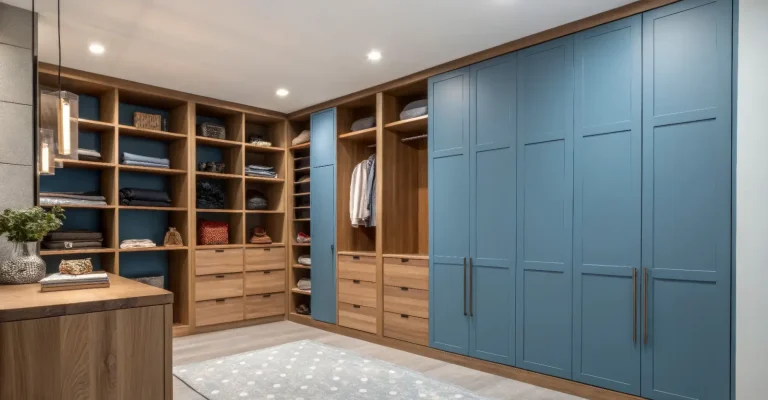
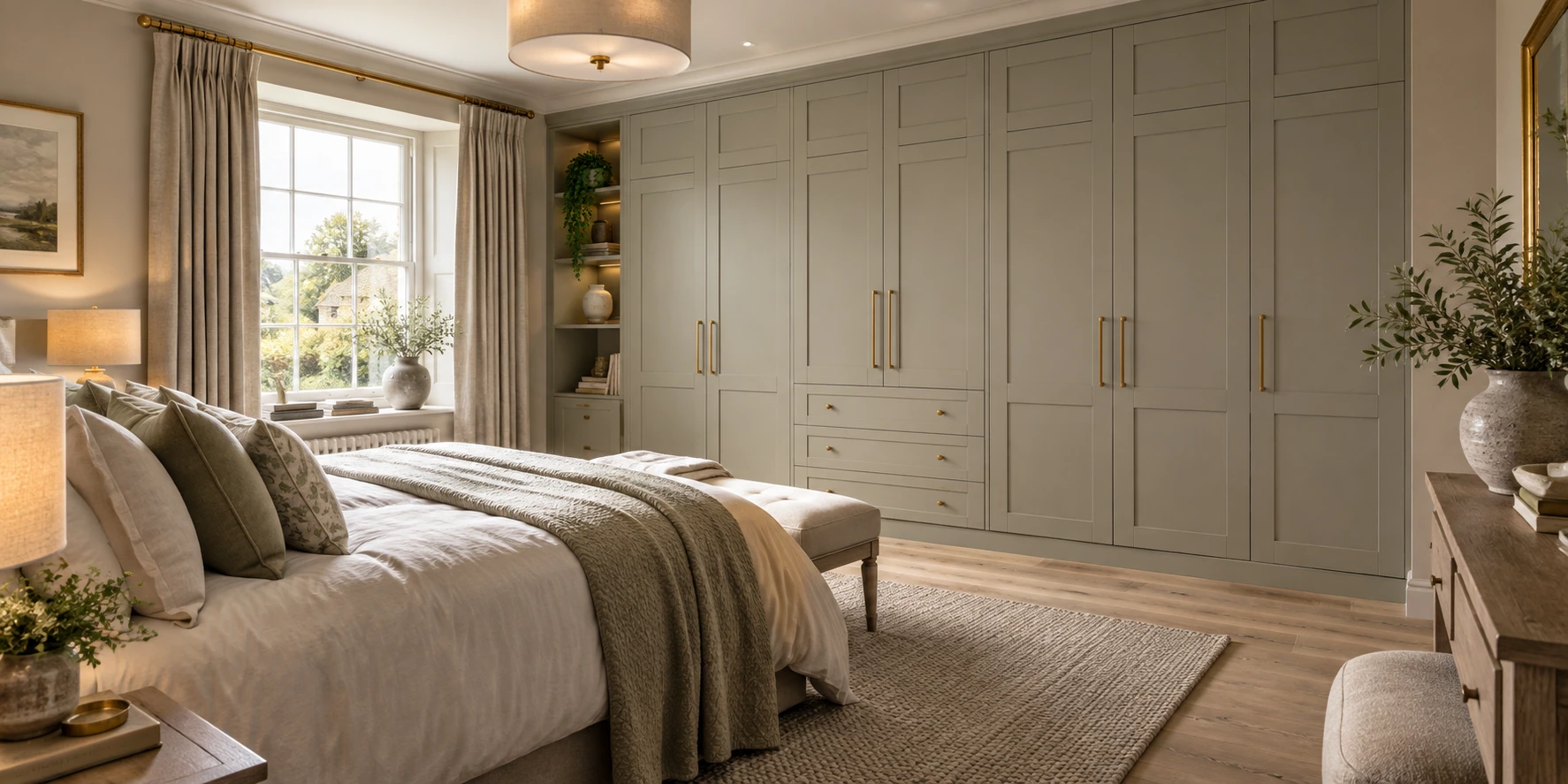
Yes, in most homes they do, provided they suit the house and are made and fitted properly. Well-designed fitted wardrobes make a bedroom more useful, make it photograph and view better, and stay with the property when you sell. What they will not do is add a fixed percentage to the asking price, whatever a sales brochure says, so the honest answer depends on the house, the room and the quality of the work.
We design, supply and install fitted wardrobes for a living, so read what follows as you would any trade’s opinion. Where we can be confident, we say so; where nobody can be, we say that too.
At a glance: buyers respond to a bedroom whose storage is obviously solved, and fitted wardrobes are one of the few pieces of furniture that get written into the sales particulars. The value is undermined by a poor fit, a finish that dates, or a design that fights the room. Done well, the bigger return is the years you spend living with them before any sale.
Why nobody can give you an honest percentage
The price of a house is set by where it is, how big it is, what condition it is in and what the market is doing that month. A wardrobe is a detail inside that picture. Estate agents and surveyors value the home, not the furniture, and a valuation does not carry a line for built-in bedroom storage.
So when you read that fitted wardrobes “add 5 per cent” or “add 10 per cent”, ask where the figure came from. It almost always comes from someone selling wardrobes, not from sale data, and we would rather not quote a number we cannot stand behind.
What can be said with confidence is narrower and more useful. Bedrooms with good fitted storage list better, show better and remove a job from the buyer’s list. In a competitive street that can be the difference between a quick sale at the asking price and a slow one with offers below it. That is value, even if it never appears as a percentage.
What a buyer actually sees
Think about how a bedroom appears in the listing photographs. A freestanding wardrobe takes a slab of floor, leaves a dust-collecting gap above it and usually has something stacked on top. A run of made-to-measure fitted wardrobes runs floor to ceiling and wall to wall, so the room reads as larger and calmer in the pictures, and the same is true when a viewer walks in.
Fitted storage also gets written down. Agents describe bedrooms as “double bedroom with fitted wardrobes” because buyers look for it, and because it is one of the few pieces of furniture that counts as part of the property rather than something the seller takes away.
Awkward rooms gain the most
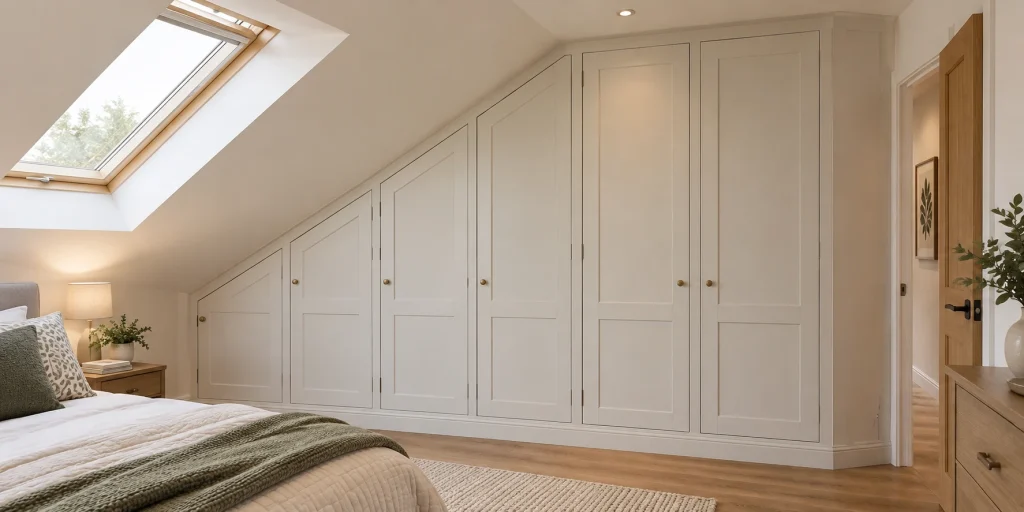
A loft bedroom with a sloping ceiling, an alcove either side of a chimney breast, a room with a boxed-in pipe or an off-square wall: these are the rooms where freestanding furniture never quite works. Wardrobes for sloping ceilings and awkward spaces turn the dead corners into usable storage, and a buyer sees a problem already solved rather than one they will inherit.
The type of house matters too. The tall rooms in the older houses around Barnt Green and Edgbaston suit full-height wardrobes with a proper cornice, which a flat-pack unit can never match. The 1930s semis and post-war family homes that make up much of the housing in Solihull often have deep, narrow bedrooms where a fitted run along the end wall leaves the rest of the room clear. In both cases the furniture is working with the architecture, and that is what buyers respond to, whether or not they could tell you why.
When fitted wardrobes add value, and when they do not
The same product can help or hurt depending on how it is designed. These are the patterns we see most often.
They add value when
- They are made to measure for the room: full height, scribed to the walls, with no filler strips or gaps for a buyer’s eye to catch.
- The finish suits the house. Painted shaker doors in a period semi, a flat matt door in a newer home, a timber or veneered front where the rest of the house has warmth in it.
- The layout leaves the room usable. The bed still fits where it should, the window is clear, the radiator still heats the room.
- The inside is as considered as the outside: hanging at two heights, drawers for folded clothes, shelving for shoes and bags, lighting that comes on when the door opens.
- The hardware is good. Hinges and runners that still close softly after years of use are what make the furniture feel solid to the next owner.
They work against you when
- They take floor space a small room cannot spare, so a double bedroom starts to feel like a single.
- The colour or finish is so personal that a buyer immediately sees a repainting job. Bold colours are wonderful on a feature piece; across a whole wall of doors they narrow your audience.
- The doors are a budget sliding system with thin frames and flimsy tracks. Buyers recognise it, and they price it in.
- The fit is poor. Visible gaps, a run that stops short of the ceiling, or carcasses that were never scribed to an uneven wall all read as a job half done.
- They block something that should stay accessible: a window, a radiator, a socket you will want.
Most of the items in the second list are design decisions, not costs. Spending more does not protect you from a wardrobe that fights the room; a good design visit does.
What makes a fitted wardrobe hold its value
Furniture that still looks and works as it should in ten years is worth more than furniture that looked good for two. Four things decide which you get.
The design. Everything starts with measuring the room as it actually is and planning the wardrobe around how you dress and what you own. Drawings come before anything is ordered, so you can see the proportions and the internal layout and change your mind while that is still free.
The materials. We specify the boards, hardware and finishes for each project rather than picking from one catalogue: decorative boards from Egger, solid timber and veneers where the design wants grain, and professional spray finishes where a factory colour will not do. A sprayed finish can also be refreshed later, which matters if tastes change.
The hardware. Soft-close hinges and drawer runners from Blum, and lighting from Häfele that is designed in from the start so the cables are hidden. These are the parts a buyer opens and closes during a viewing.
The manufacture and the fitting. Every project is designed and managed by us from Bromsgrove, with the components precision-manufactured to our drawings by trusted specialist partners and installed to our standards. The result is furniture that is scribed to the room rather than wedged into it.

One more point that is easy to overlook. The guarantee on furniture we supply and install is written so that it can pass to a later owner of the same property. For a buyer that is a small reassurance; for a seller it is a line worth having. The details are on our guarantee and aftercare page.
The value you get before you ever sell
Most people who ask whether fitted wardrobes add value are not about to move. They are deciding whether to spend the money on a house they plan to stay in, and they want to know it is not money thrown away. It is not, and the reason has little to do with resale.

A room that works every morning
Everything has a place, so the chair in the corner stops being a wardrobe. Doors open without swinging into the bed. The shelves light up when you open them on a dark morning. The top of the wardrobe no longer needs dusting because there is no top. None of this shows up in a valuation, and all of it shows up every day.
If you might move in a few years
This changes the calculation less than people expect. Fitted wardrobes are fixed to the house and normally treated as part of it when you sell: the fittings and contents form completed during a sale in England and Wales asks the seller to state what is staying, and fitted furniture is normally listed as included. Freestanding furniture comes with you, which is the right choice if you have a piece you love, but it also leaves the next owner an empty wall and a storage problem.

Design for the house, not for the sale
If a move is likely within a few years, the sensible adjustment is in the design, not in whether to go ahead: choose a finish that belongs to the house rather than to a trend, keep the layout generous and the room clear, and let the quality of the fit speak for itself. A classic, well-fitted wardrobe is the easiest thing in the world for a buyer to say yes to.
If you are weighing it up, the first design visit is free and there is no obligation to go ahead. We measure the room, talk through what you need to store, and send drawings with a written quotation before anything is ordered. For a sense of budget first, our guide to what fitted wardrobes cost and how long they take explains what moves the price, and how a project runs from the first visit to installation covers the rest.
Questions people ask about fitted wardrobes and value
Do fitted wardrobes add value to a flat?
Often more than to a house, because storage is scarcer and every square foot of floor matters. The same rules apply: keep the finish light and the layout tight to the wall.
Should I fit wardrobes just before I sell?
Only if the bedroom is a visible weakness, such as a main bedroom with no storage at all or a loft room where nothing freestanding fits. Spending purely to impress a buyer rarely pays; spending to fix a room that would otherwise be marked down can.
Will a bold colour put buyers off?
A strong colour on a single feature, such as a dressing-table recess or the inside of the doors, is rarely a problem; a whole wall of doors in a very personal colour narrows your audience. Sprayed finishes can be refinished later, so the choice is not permanent, but if resale is on your mind a neutral or classic colour on the main run is the safer choice.
Do fitted wardrobes stay with the house when I sell?
Normally, yes. They are fixed to the property, and on the fittings and contents form completed during a sale they are normally listed as included. Your conveyancer will confirm the position for your sale.